
Custom Jewelry Manufacturing Proces
Custom jewelry manufacturing transforms an idea or design concept into a finished wearable piece through a combination of craftsmanship, technology, and detailed production steps. Whether creating engagement rings, sterling silver necklaces, gold bracelets, or personalized charms, custom jewelry production allows brands and customers to create unique designs tailored to specific styles and preferences.
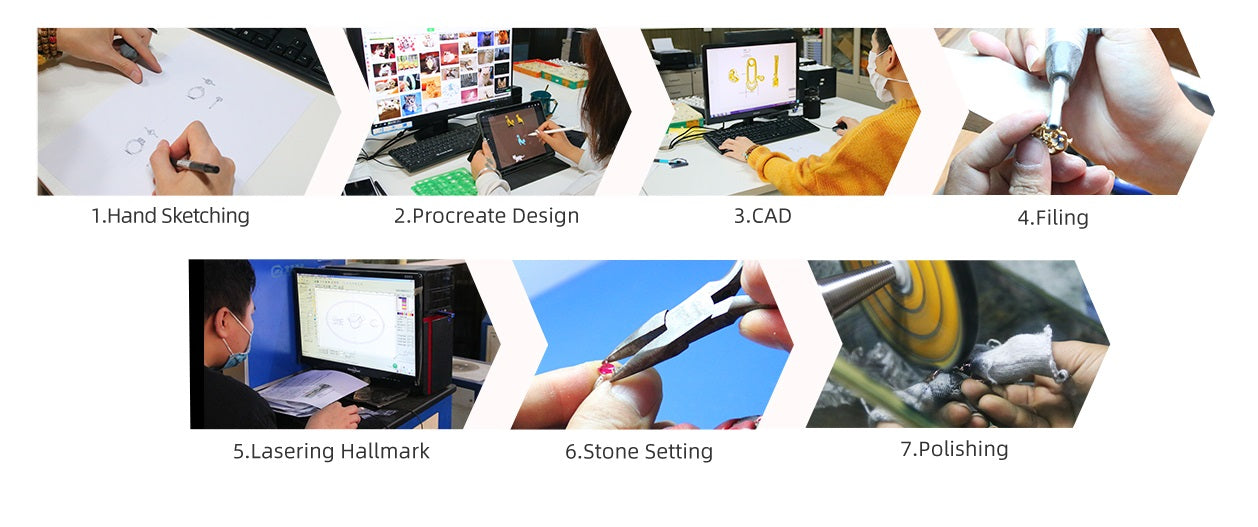
Today, custom jewelry manufacturing is widely used by:
- Jewelry brands
- E-commerce businesses
- Fashion designers
- Gift companies
- Private label manufacturers
Personalized jewelry continues to grow in popularity because customers increasingly value unique and meaningful accessories.
Custom Jewelry Is Growing
According to Statista, the global jewelry market continues to expand as consumers seek personalized and premium fashion accessories. Customized jewelry is especially popular in:
- Gift markets
- Wedding jewelry
- Fashion jewelry
- Luxury accessories
Personalization has become a major trend in modern jewelry design.
What Is Custom Jewelry Manufacturing?
Custom jewelry manufacturing is the process of designing and producing jewelry based on:
- Original concepts
- Client requirements
- Brand specifications
- Personalized details
Custom production may involve:
- Sterling silver
- Gold
- Stainless steel
- Gemstones
- Enamel
- Plating finishes
Step-by-Step Custom Jewelry Manufacturing Process
1. Design Concept & Consultation
The process begins with:
- Sketches
- Inspiration images
- CAD concepts
- Material selection
Design discussions often include:
- Jewelry type
- Size and dimensions
- Stone placement
- Finish preferences
- Engraving details
Clear design communication helps reduce production errors.
2. CAD Jewelry Design
Most modern jewelry manufacturers use CAD (Computer-Aided Design) software to create digital 3D jewelry models.
Benefits:
- Accurate dimensions
- Detailed visualization
- Faster modifications
- Improved production precision
CAD files help clients preview jewelry before manufacturing begins.
3. 3D Printing or Wax Model Creation
After CAD approval, manufacturers create:
- Resin prototypes
- Wax molds
- 3D printed samples
These prototypes are used for:
- Design inspection
- Mold preparation
- Sample approval
4. Mold Making
A mold is created from the prototype to reproduce the jewelry design consistently.
Common mold materials:
- Silicone
- Rubber molds
- Metal molds
Molds are especially important for mass production.
5. Metal Casting
Molten metal is poured into the mold to create the jewelry base.
Common casting materials:
- Sterling silver
- Brass
- Gold
- Stainless steel
Popular casting methods:
- Lost-wax casting
- Vacuum casting
Casting creates the main structure of the jewelry piece.
6. Cleaning & Polishing
After casting, jewelry pieces are:
- Trimmed
- Smoothed
- Polished
Polishing helps create:
- Shine
- Smooth surfaces
- Professional finishing quality
7. Stone Setting
Gemstones or crystals are carefully placed into the jewelry.
Common setting styles:
- Prong setting
- Bezel setting
- Pavé setting
- Channel setting
Stone setting requires precision craftsmanship.
8. Plating & Surface Finishing
Many jewelry pieces receive additional surface treatments such as:
- Gold plating
- Rhodium plating
- Oxidized finishes
- Matte polishing
These finishes improve:
- Appearance
- Tarnish resistance
- Style customization
9. Quality Inspection
Manufacturers inspect:
- Stone security
- Surface quality
- Measurements
- Clasp functionality
- Plating consistency
Quality control helps ensure customer satisfaction.
10. Packaging & Shipping
Finished jewelry is prepared using:
- Jewelry boxes
- Protective packaging
- Branding materials
Many brands use customized packaging to improve presentation and customer experience.
Popular Types of Custom Jewelry
Custom Rings
- Engagement rings, fashion rings, stacking rings.
Personalized Necklaces
- Initial pendants, name necklaces, birthstone jewelry.
Custom Bracelets
- Charm bracelets, engraved cuffs, friendship jewelry.
Custom Earrings
- Studs, hoops, geometric designs, gemstone earrings.
Materials Commonly Used in Jewelry Manufacturing
| Material | Benefits |
|---|---|
| Sterling Silver | Durable & affordable |
| Gold | Premium luxury appearance |
| Stainless Steel | Strong & tarnish-resistant |
| Brass | Cost-effective for fashion jewelry |
| Gemstones | Decorative and valuable |
OEM vs ODM Jewelry Manufacturing
OEM (Original Equipment Manufacturing)
- Manufacturers produce designs provided by the client.
ODM (Original Design Manufacturing)
- Manufacturers provide pre-designed jewelry that brands can customize.
CAD & 3D Printing Changed Jewelry Manufacturing
Modern technology allows:
- Faster prototyping
- Better customization
- Lower design costs
- Improved production accuracy
Technology has made custom jewelry more accessible for small brands and startups.
How to Choose a Jewelry Manufacturer
Look for:
- Production experience
- Material quality
- CAD design capability
- MOQ flexibility
- Quality control standards
- Communication responsiveness
Sampling before mass production is highly recommended.
Personalized Jewelry Continues to Grow
Consumers increasingly value:
- Emotional connection
- Unique accessories
- Personalized gifts
- Limited-edition fashion
Custom jewelry combines creativity, identity, and craftsmanship.
FAQ
1. What is custom jewelry manufacturing?
It is the process of designing and producing jewelry based on personalized or brand-specific requirements.
2. What materials are commonly used in custom jewelry?
Sterling silver, gold, brass, stainless steel, and gemstones are among the most commonly used materials.
3. What is CAD jewelry design?
CAD jewelry design uses computer software to create detailed 3D digital jewelry models before production.
4. How long does custom jewelry manufacturing take?
Production timelines vary depending on complexity, materials, and quantity, but custom projects often require several weeks.
5. What is the difference between OEM and ODM jewelry manufacturing?
OEM uses client-provided designs, while ODM allows brands to customize manufacturer-created designs.